Pale Fires: Annice Fell, H.E. Morris, and Tianyue Zhong
15 – 20 October 2024
17 rue Chapon, Paris, France
The moon’s an arrant thief and her pale fire she snatches from the sun.
– William Shakespeare, Timon of Athens, Act IV (1606)
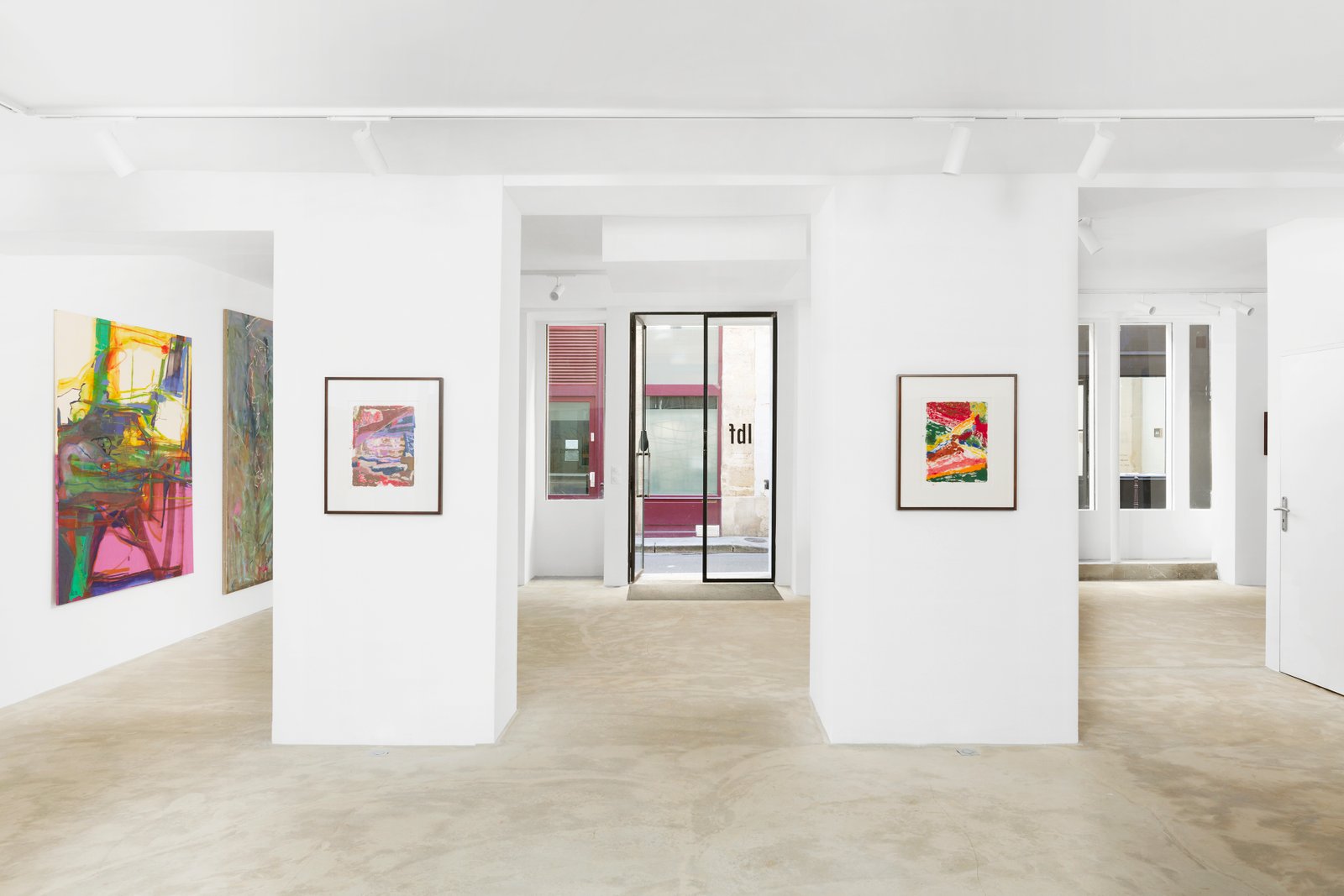
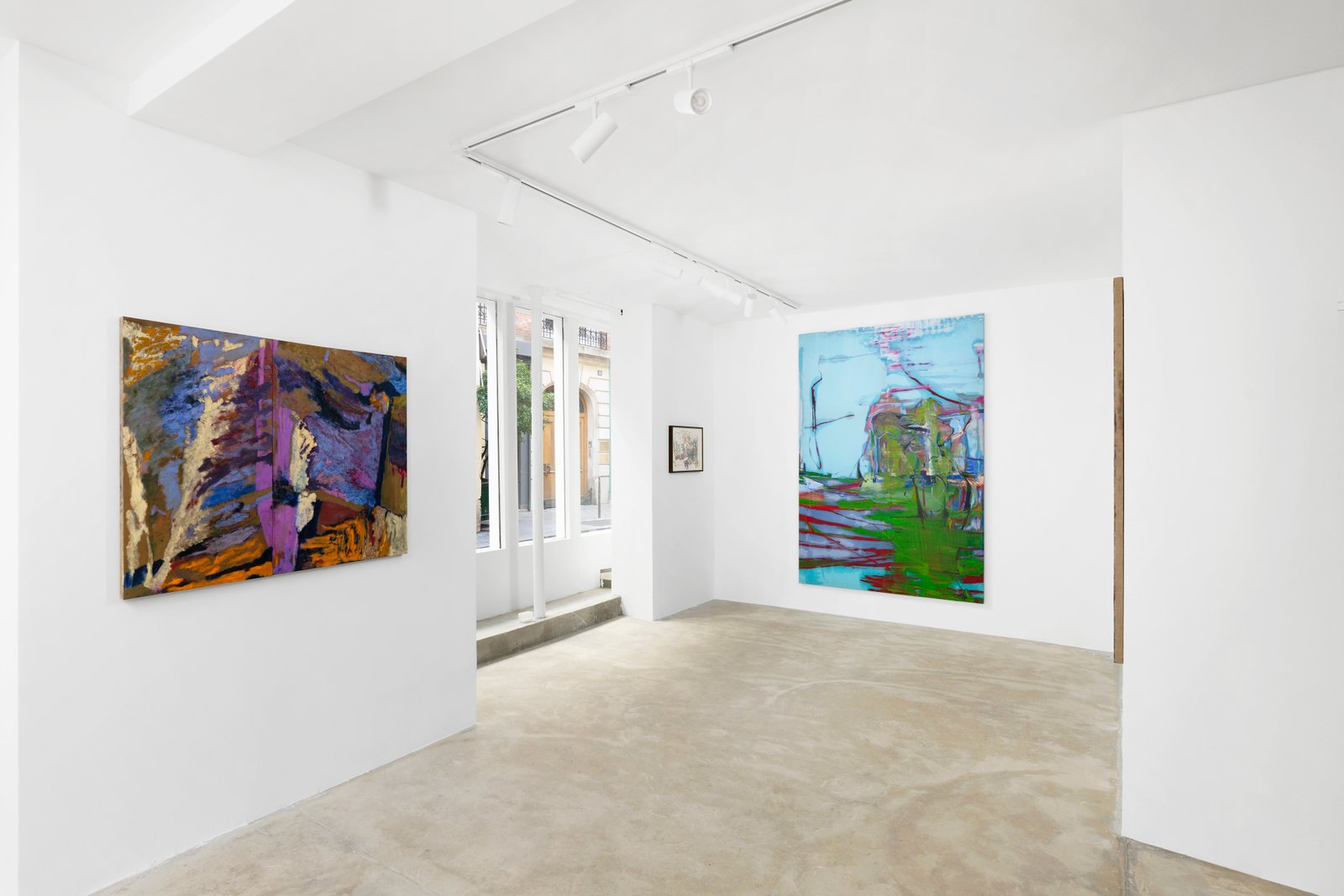
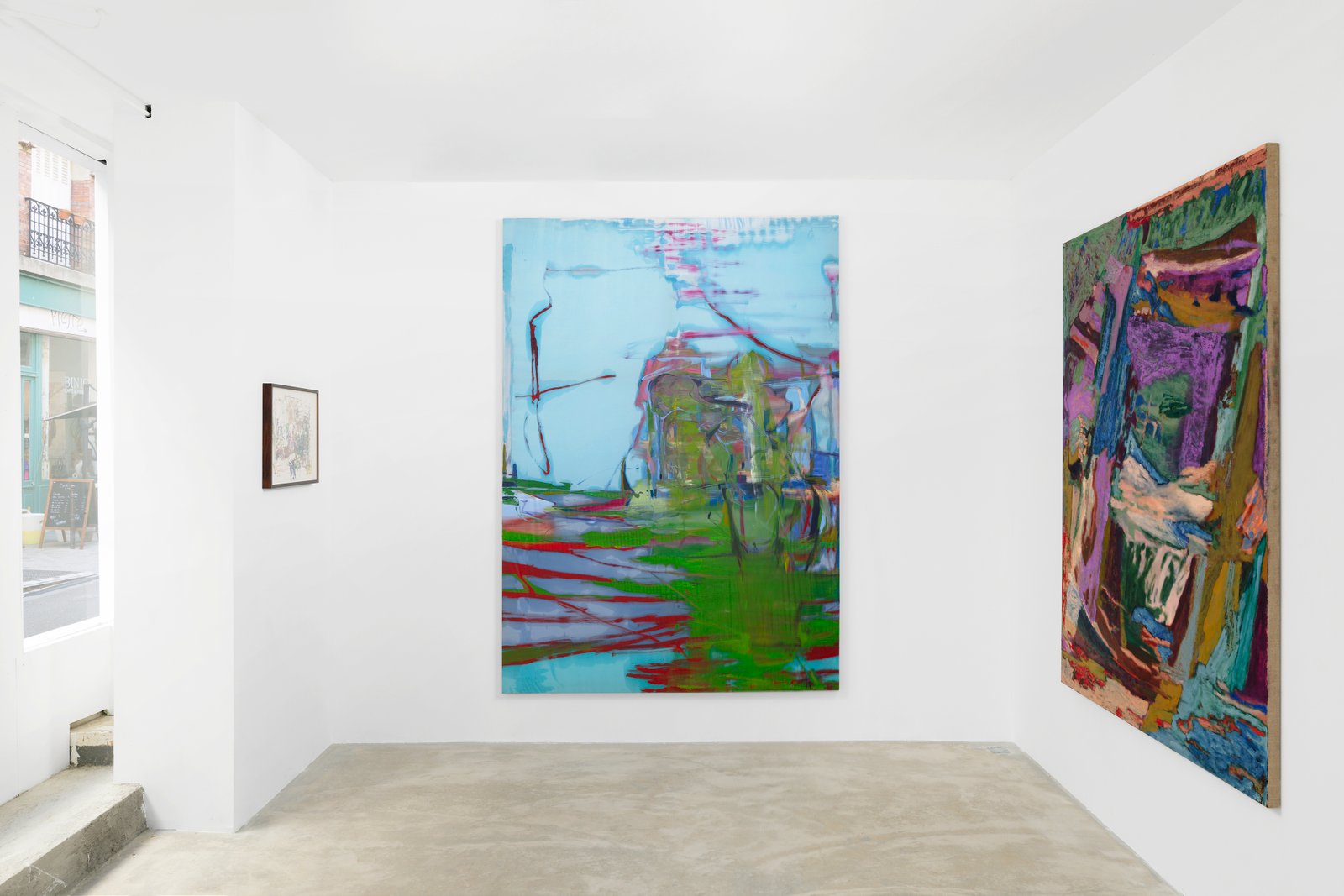
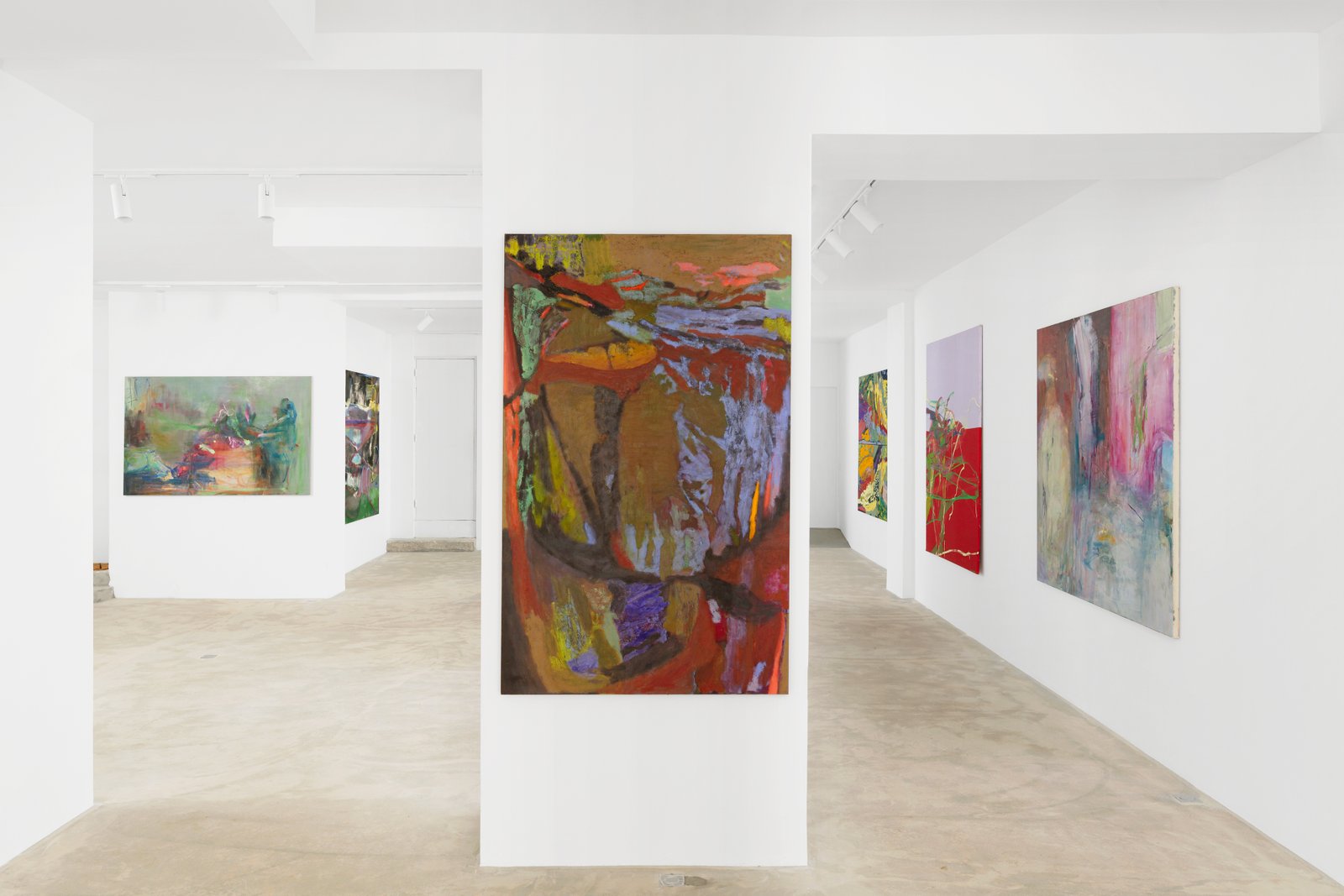
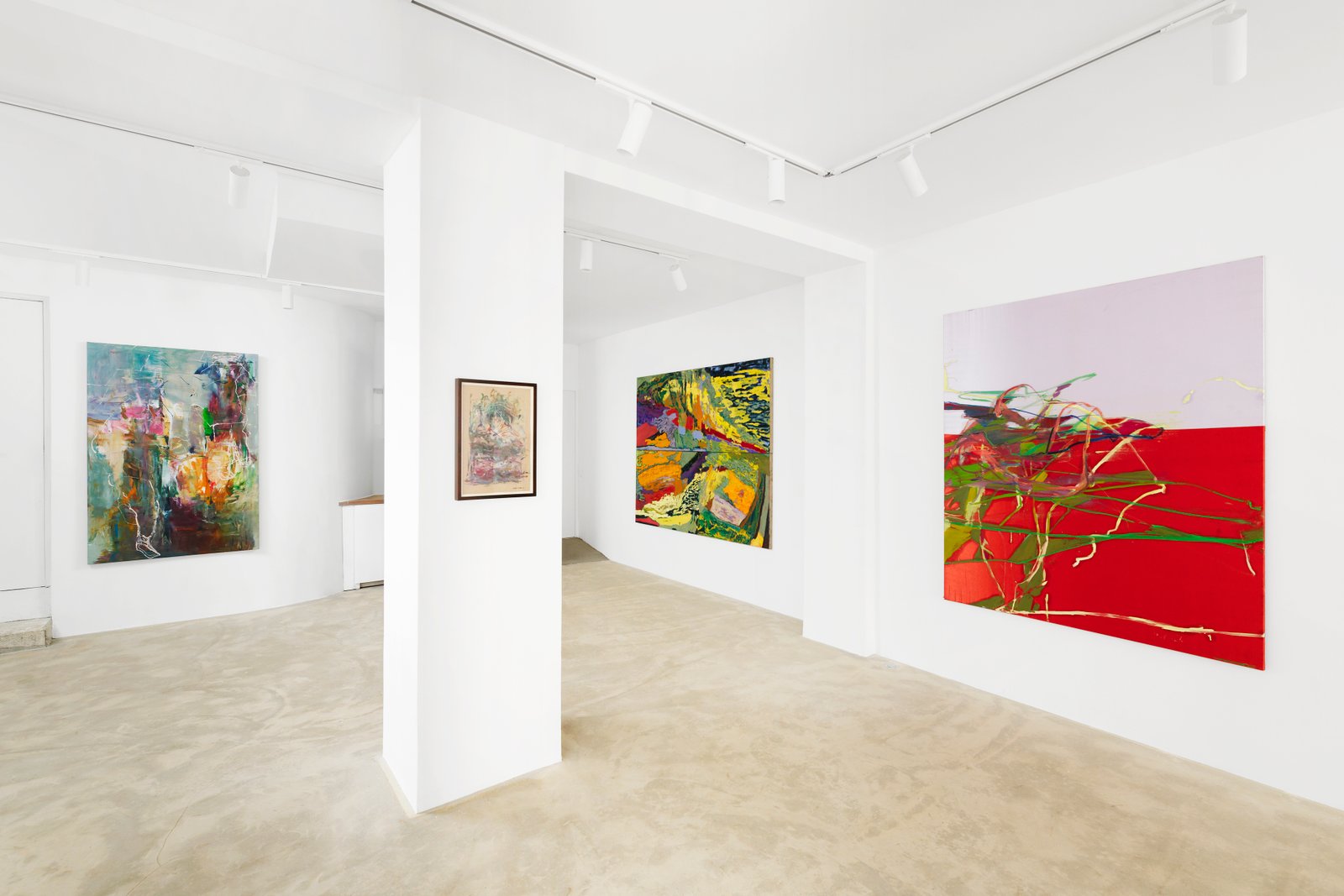
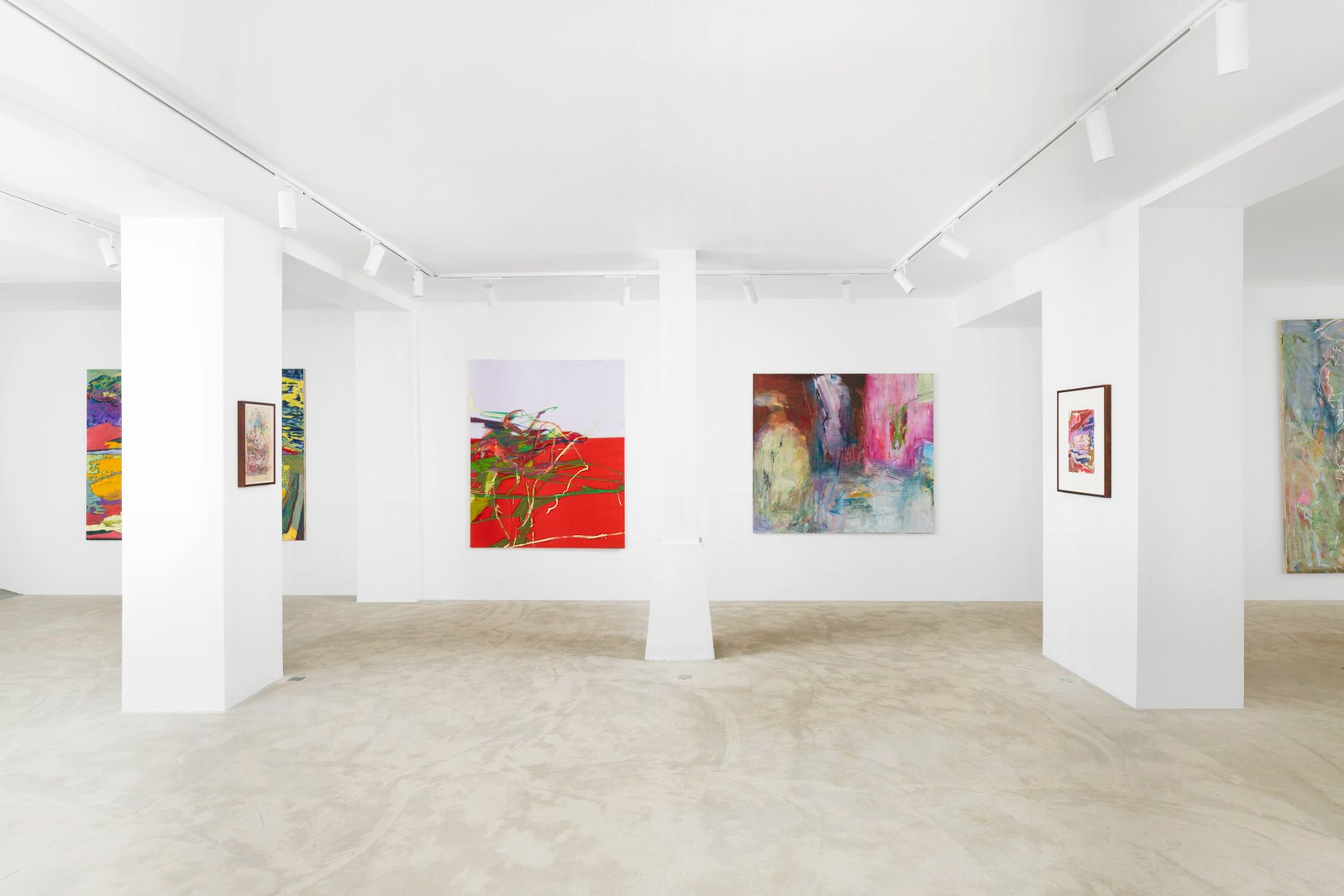
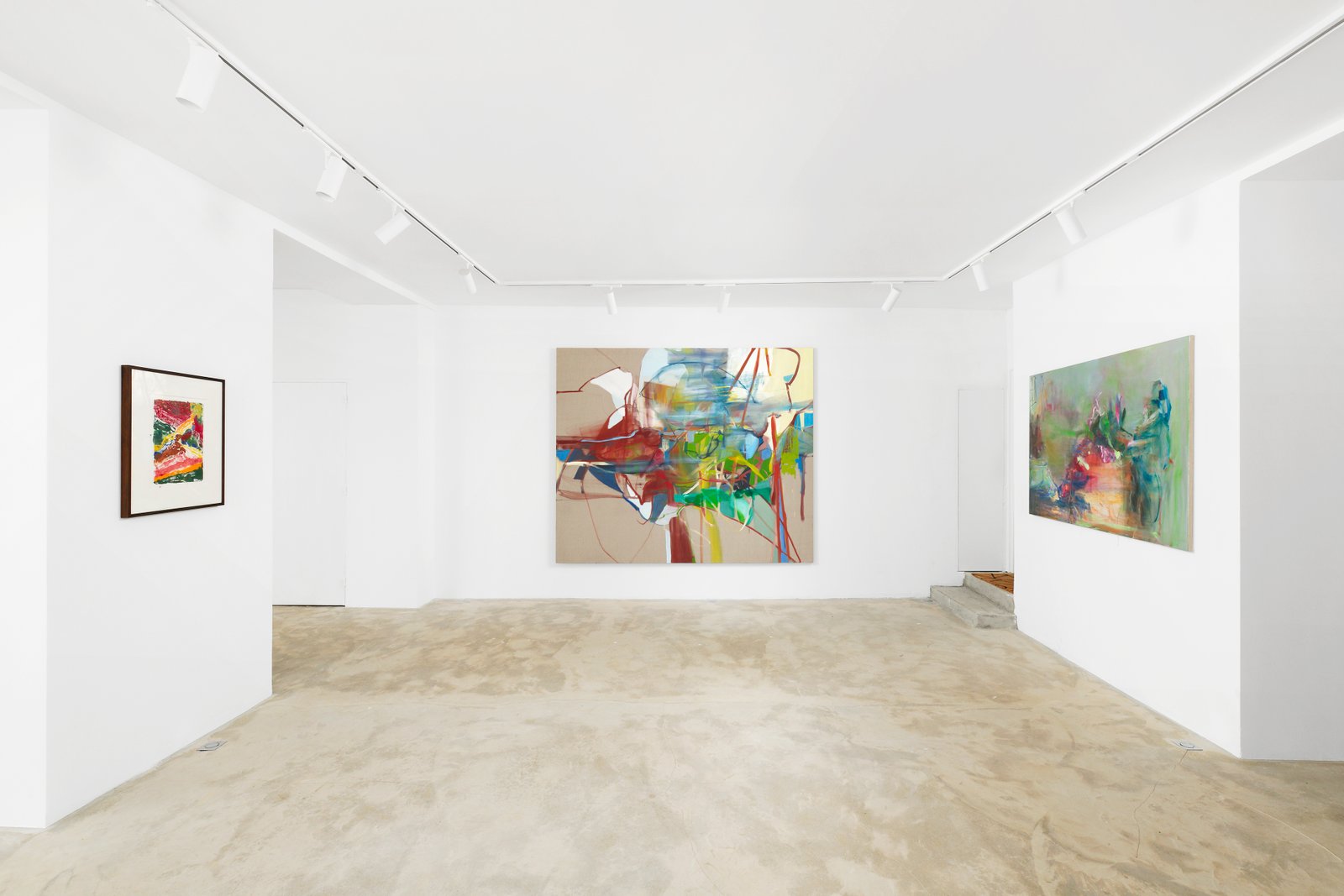
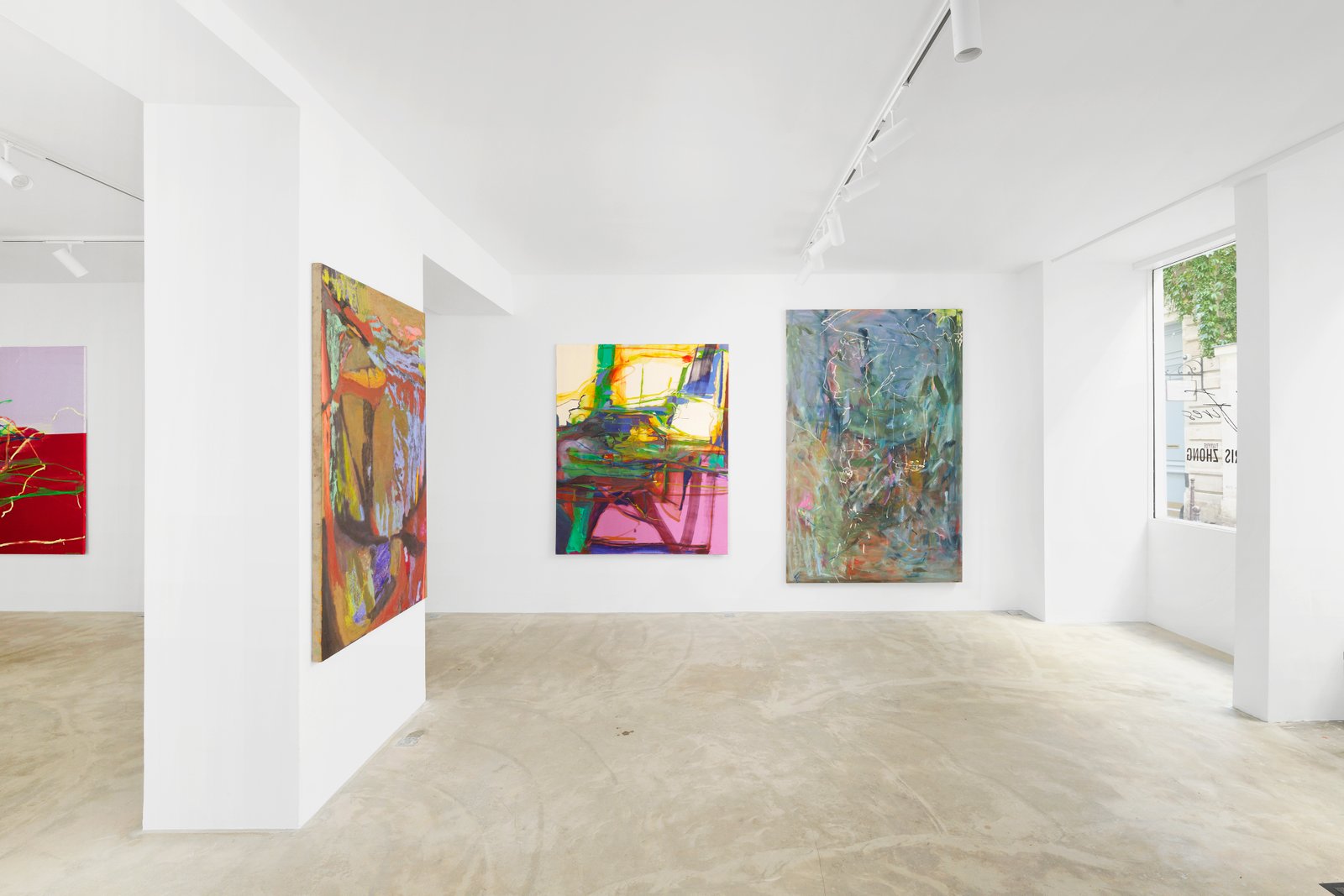
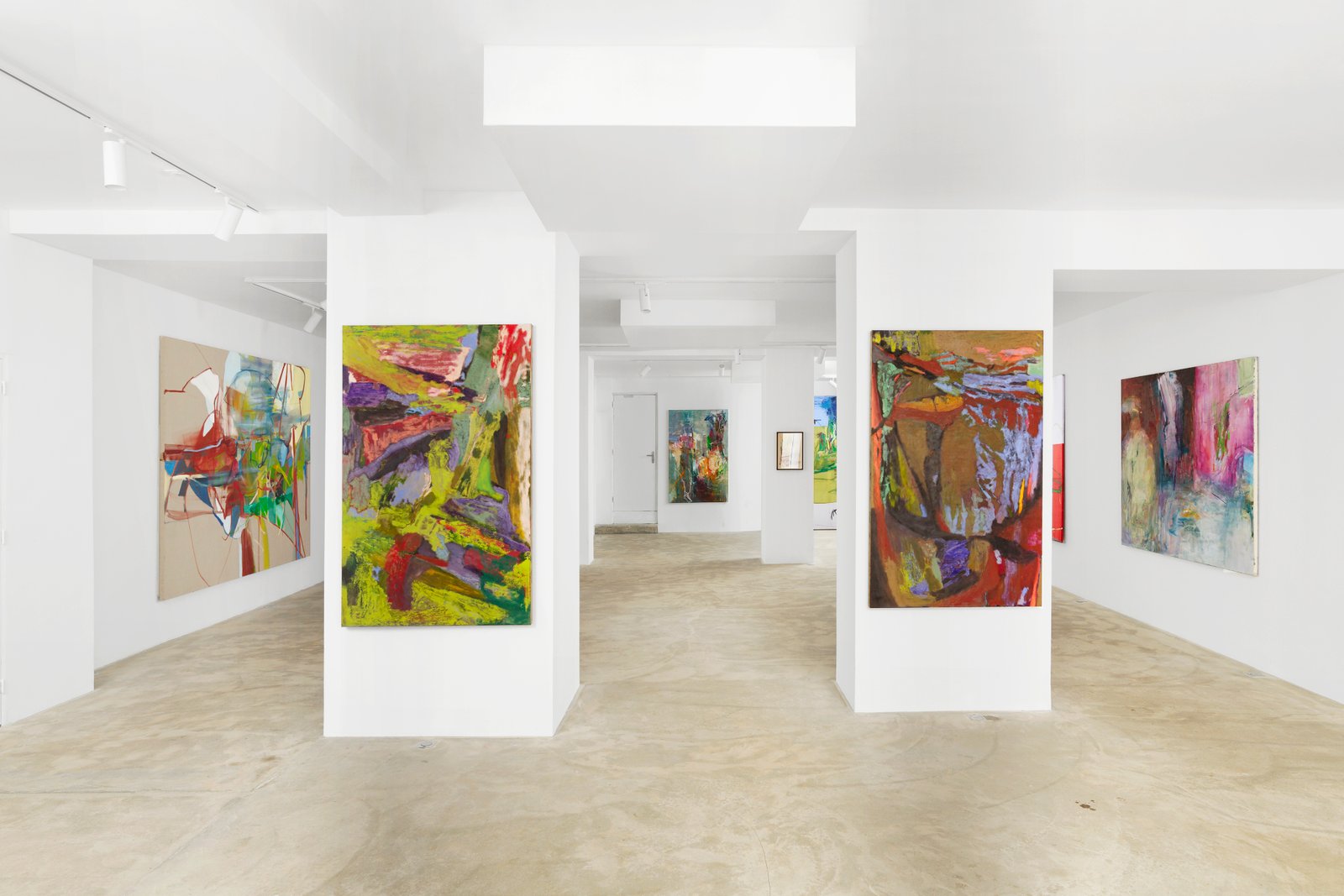
The three artists on show in Pale Fires—Annice Fell, H.E. Morris, and Tianyue Zhong—represent the interplay between dialectical tensions: first, and most obviously, between abstraction and figuration, those two rivals in painterly subject; then, between ideas and their practical application on the material surface of the work; as well as, most lyrically, between Shakespeare’s depictions of the sun and the moon from Timon of Athens, which inspires the exhibition’s title, and I have chosen for my epigraph.
By gendering the sun and moon, two thieves alike, the Bard plays on metaphors of creativity and inspiration. (For this writer at least, it anticipates Picasso’s oft-parodied line: ‘Good artists copy, great artists steal’). It is presumably for this reason, Vladimir Nabokov used Pale Fire for his experimental 1962 novel, a work of metafiction that narrates the experience of making, and which the critic Mary McCarthy described as a ‘Jack-in-the-box, a Faberge gem, a clockwork toy, a chess problem, an infernal machine, a trap to catch reviewers, a cat-and-mouse game.’ We might describe the works by our triangle of abstract painters in a similar way; not because their work bears the hallmarks of deceit and deception but because, long after you’ve finished looking at these paintings, they work on you in a way that makes you want to know how they did it. And did it they have, make no bones about it: here are three artists for whom painterly abstraction, far from succumbing to compositional dead-ends, has reimagined the form entirely afresh. At a time when this version of abstraction––the one that is material, and deeply felt, and still sopping wet––seems to be having a second life, Fell, Morris, and Zhong offer new ways out of the old cul-de-sacs; they have stolen the sun before you even know the lights are out.
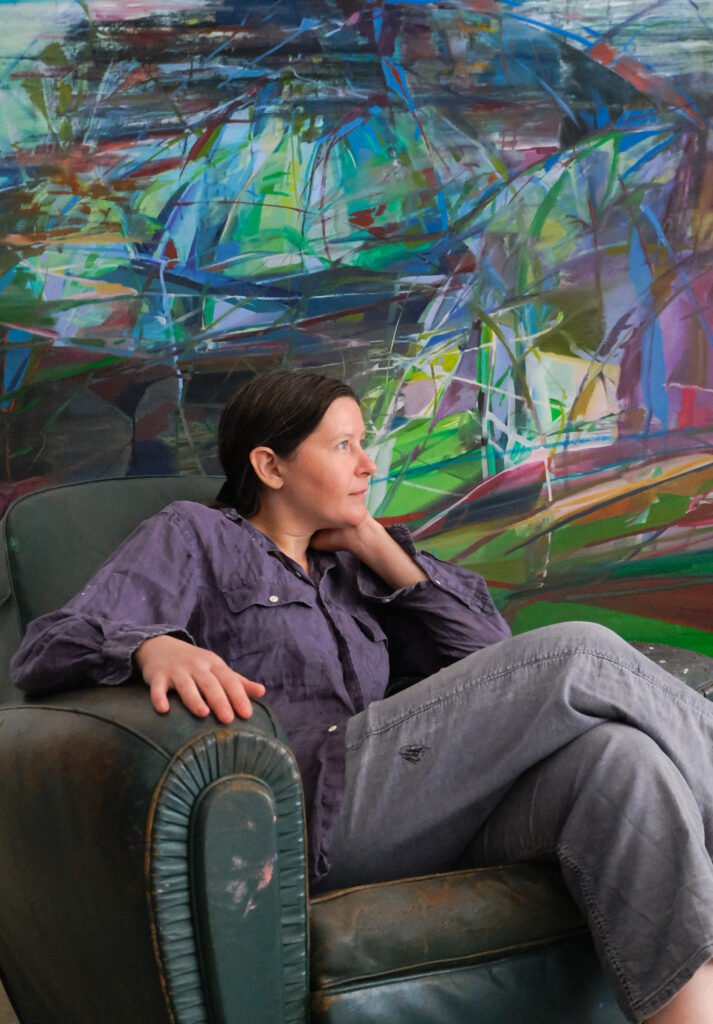
It feels like more than a coincidence that the present exhibition opens exactly a century since André Breton published the first Surrealist Manifesto in Paris. Drawing on the psychoanalytic theories of Sigmund Freud, the Surrealists sought to overthrow what they perceived as the oppressive rationalism of modern society by accessing the sur réalisme(superior reality) of the subconscious. While Annice Fell’s work might be more coherently understood within the abstract landscape tradition, and are increasingly engaged with the ways in which atmosphere, weather, and mood find form in her paintings, some of her compositional methods explicitly revivify Surrealist methods for our own time. By integrating Surrealist techniques of psychic automatism and decalcomania, in which Fell first uses plastic sheets to cover the surface area of stretched linen, and then wheels a DIY paint roller of gaffer tape to a long wooden bar, and then responding to those errant marks, forms, and colours, Fell is in dialogue with her materials to transform the work.
The outcome is something like a negotiation, not between two enemies but the kind of conciliation one might expect between the scientist and her chemicals. ‘Even if the print does come from an initial idea for a painting’, Fell reflects, ‘the marks are lost in transfer and/or distorted in terms of the directional quality so it becomes separate from any preconceived vision I had for the piece…. Each painting almost becomes an enquiry into the self and I would describe the finished paintings as a “snapshot” or a “freeze frame” of this.’ The materials of the oil pastel allow Fell to refine and solidify the composition by either drawing or concealing, as well as using the surface to mix with the paint that gathers below. For Fell, as for Morris and Zhong, painting is too complicated a force to be merely reduced to the two categories of abstraction and figuration, and into stultifying camps of paintings that refer explicitly to its own medium, and paintings that refer us to the world of things with which we are familiar. For Fell, painting redacts the antinomies of abstraction and figuration because it offers her a new kind of open-ended language with which to communicate: her work is intuitive, responsive, and generous to the revelations of subject in her material experiments. It is in this way that her work reminds me of the way she reconciles the tenderness of Milton Avery’s surfaces of abstract landscapes with the brut materiality of artists like Per Kirkeby, Willem de Kooning, or, more closely to our moment, like Rachel Jones. ‘Because the materials usually both capture different stages of the painting’, Fell reflects, ‘I think it offers two ways of seeing touch: this is ultimately a material choice that is driven mostly by method but also enhances this idea of self-documentation through the touch.’ Touch and sense, action and reaction: these pushes and pulls animate Fell’s world of forms.
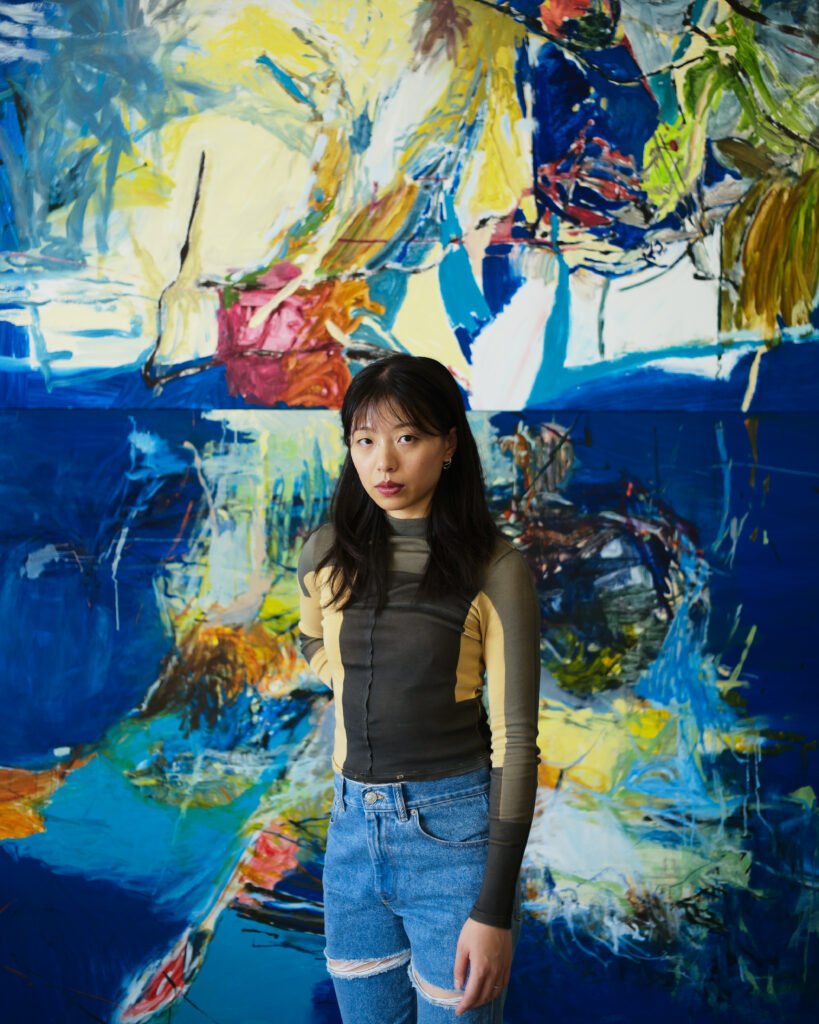
In a similar way, Tianyue Zhong’s paintings are both intensely tactile and intellectually exciting, as they respond to the ways in which the history of gesture shapes, and is shaped by, social commitments. To offer a concrete example, many of Zhong’s paintings are inspired, directly and indirectly, by historical photographs. In many cases, she is responsive to significant historical turning points in her native China: from the time when the Nationalists retreated from Shanghai after their defeat in the civil war or when China reopened to the world during the second stage of economic reform, Zhong reveals surprising correlations between documentary photography and gestural abstraction. ‘What interests me about these photographs is their shared quality of capturing human interactions in a way that focuses on the group rather than individual figures’, Zhong reflects. Above all, Zhong explains that she is ‘intrigued by the question of whether historical events evolve as a linear progression or if they are more like reactive elements that influence and reshape each other.’ Indeed, we might ask the same question of painting itself: a distinctly historical process in which artists react sympathetically and antagonistically to what has come before them.
In one photograph which inspired the artist, taken by Henri Cartier-Bresson and depicting Shanghai citizens desperately trying to reach a bank to change their depreciating currency in 1948, we see a succession of bodies in dirty trench coats jostling in a scrum of a queue as they try to avoid a precipitous fall. Looking at the photograph, in which individual arms stretch and reach while also forming an unbroken continuum, a succession of columns representing life on the brink, we are reminded of Zhong’s extraordinary ability to coalesce errant lines of paint into a coherent whole and where, as in the photograph, gestures of touch and intimacy (like a hand on a shoulder, like the transformation of one colour when it is half-obscured by another) becomes a means of self-preservation. In Everlasting Rain (2024), in which the faint but unmistakable outline of a lower body jumping becomes transformed by the textured overlay of wrought pigment, we come face to face with what is at stake in Zhong’s paintings: a world just about still in view but slowly being erased; a world to be protected; a world which will continue to renew itself.
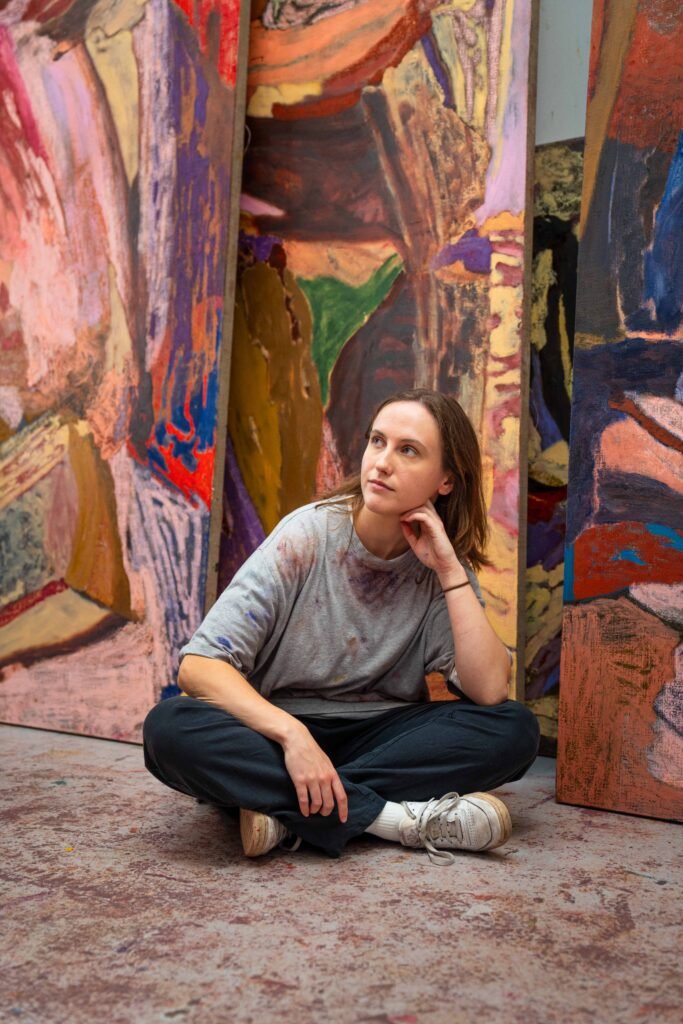
This powerful sense of painting as emerging in a perpetual state of becoming recalls the extraordinary work of H. E. Morris. When I saw Morris’ works for the first time, I felt as though I had stumbled upon them in medias res, right in the midst of things. Using an innovative arsenal of materials, Morris creates work that pulsates, pulls apart, and dissects her subject matter, right there in front of you. Indeed, while integrating shape-shifting colour into her compositions, it is difficult to describe Morris’ work using concrete nouns and adjectives. The dynamism of verbs feels much more appropriate. In Ghostly Demarcations (2024), an oil on linen work that seems to pull apart at the seams, violent breaks of acid green jut south from a hazy whirr of white-blue in a horizontal motion that recalls a very fast object, like a bullet train’s window, moving by us faster than we can comprehend it.
Elsewhere, orthogonal burgundies, like the muscular moulds between bones, create an extraordinary sense of layered tension that speaks to the sense of spectral traces in the painting’s title. In Fall Back (2024) a central rectangular shape assumes all the complexity of a circuit board while below, in streaks of red on lilac, we see the amorphous resemblance of a bird in flight with wings at full extenuation. Everywhere one looks we encounter the traces and residues of fierce and frenetic movement: lines become incisions, colours become form, surface becomes depth, as Morris snatches from the elemental world the constituent parts of her paintings for their environmental energy. If these artists snatch from the past––from the avant-garde, from historical photography, from studies of energy in motion––then they do so in a distinctly contemporary idiom which recognises that the past is never past. A perceptive viewer of these paintings will only see flashes of the future of painting in them.
Installation Views